
PRODUCTS
ball joint
- Model:-
- Made Year:-
- Color:-
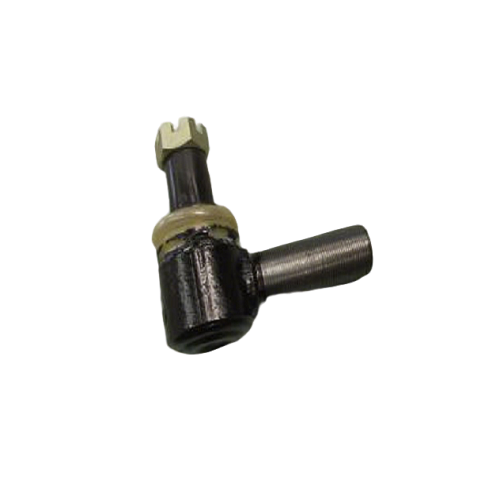
Description and specifications
-wrap-mode: nowrap; color: rgb(0, 0, 0);">Ball joint pins serve as the core connecting components in automotive steering transmission mechanisms. Key information is as follows:
Core Function
Connects the steering tie rod to the steering knuckle (or steering arm), transmitting steering forces while allowing multi-angle oscillation between components. This ensures flexibility and smoothness during steering operations. Simultaneously, it withstands impact loads during vehicle operation, maintaining the connection stability of the steering system.
Compatible Models & Systems
Compatible Models: Heavy-duty trucks including Sinotruk Howo, Shaanxi Dailong, Dongfeng Tianlong, etc.
Compatible Systems: Tie rod connection points in mechanical steering systems or hydraulic power-assisted steering systems of heavy-duty trucks.
Product Features
Structure & Materials: Comprises a ball joint, ball joint housing, and dust cover. The ball joint uses quenched steel (enhancing wear resistance), while the housing is made of rubber/nylon (reducing friction noise). The outer dust cover prevents dust and moisture ingress, avoiding ball joint corrosion and seizure.
Operational Characteristics: Subject to prolonged alternating loads and friction, making it a high-wear component in the steering system. Excessive wear causes increased steering play, steering wheel vibration, and may compromise steering precision.
Maintenance Guidelines:
Regularly inspect ball joint looseness (typically every 10,000 km). Replace immediately if dust boot damage or excessive ball joint play is detected.
Perform wheel alignment after replacement to ensure proper steering parameters.
WG9925430100 | Tie Rod End (Large) | Tie Rod Joint Assembly (Left) | 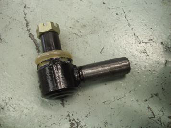 |
WG9925430200 | Tie Rod End (Large) | Tie Rod Joint Assembly (Right) | 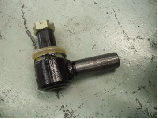 |