
PRODUCTS
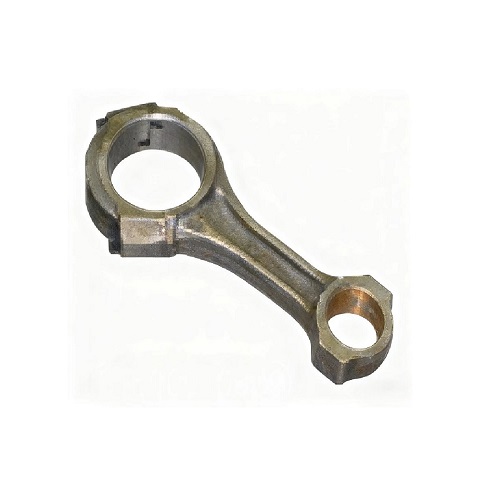
Connecting rod
- Model:-
- Made Year:-
- Color:-
Description and specifications
-wrap-mode: nowrap; color: rgb(0, 0, 0);">Connecting rod, as the core transmission component of the engine crankshaft-connecting rod mechanism, features the following key information:
Core Function
Connects the piston to the crankshaft, converting the piston's reciprocating linear motion into rotational motion of the crankshaft while transmitting power generated by combustion. It serves as one of the critical mechanical components for engine power output.
Compatible Models and Engines
Compatible Engines: Weichai WD615/WP10, Sinotruk MC07 diesel engines, etc.
Compatible Models: Heavy-duty trucks including Sinotruk Howo, Sandaika, Shaanxi Delong, etc.
(Model: VG1560030010)
Product Features
Structure and Material: Forged steel (e.g., 42CrMo) offers high strength and toughness to withstand combustion impact loads. Features a “large end” (connecting to crankshaft) and a “small end” (connecting to piston pin), with an internal bronze bushing (or needle roller bearing) in the small end to reduce piston pin wear.
Manufacturing Process: Undergoes forging, quenching and tempering, and precision machining. The big end bore is typically split-type (for mating with connecting rod cap during installation). Strict dimensional accuracy and dynamic balancing are required to prevent vibration during operation.
Operational Characteristics: During operation, it simultaneously bears combined loads including tension, compression, and bending. Consequently, it is a “high-stress component” of the engine, requiring regular inspection for cracks, deformation, or other faults.
Maintenance Key Points: When replacing connecting rods, use original manufacturer connecting rod bolts (tighten once; do not reuse). During assembly, ensure the proper clearance between the connecting rod big end and the crankshaft to prevent abnormal noise or bearing seizure.