
PRODUCTS
Drive sprocket
- Model:-
- Made Year:-
- Color:-
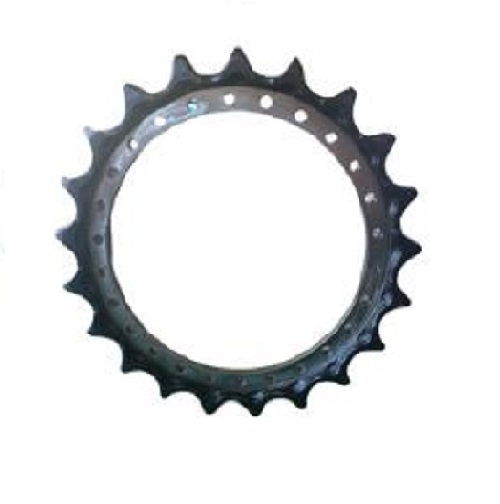
Description and specifications
-family: 微软雅黑; font-size: 15px; color: rgb(0, 0, 0);">Drive sprockets for construction machinery (also known as sprocket rings or sprockets) serve as the core power transmission components in the travel systems of tracked equipment, constituting a vital part of the “four wheels and one track” assembly.
Core Information
Function: Connects to the output shaft of the transmission or final drive. Through its toothed profile, it meshes with the track chain to transmit power to the tracks, driving the equipment forward or backward. The tooth design must precisely match the track pitch to ensure smooth power transfer.
Characteristics: Forged from high-strength alloy steel with carburized and quenched surfaces, featuring high tooth surface hardness and exceptional wear resistance to withstand impact and torsional forces under heavy-duty conditions. Mounting holes on the wheel body connect to the drive shaft flange, requiring high positioning accuracy.
Applications: Compatible with bulldozers, excavators, crawler Loaders, and similar equipment. Each machine requires a drive sprocket with corresponding tooth profile and pitch.
Extended Knowledge
Tooth profile wear on drive sprockets is a common failure in travel systems. Replacement is required when tooth surface wear exceeds 15% of the original tooth thickness, as continued use may cause poor track engagement and increased derailment risk. Routine maintenance should include periodic inspection of drive sprocket tooth wear and bolt tightness.